Xander Schulz · 1 September 2026
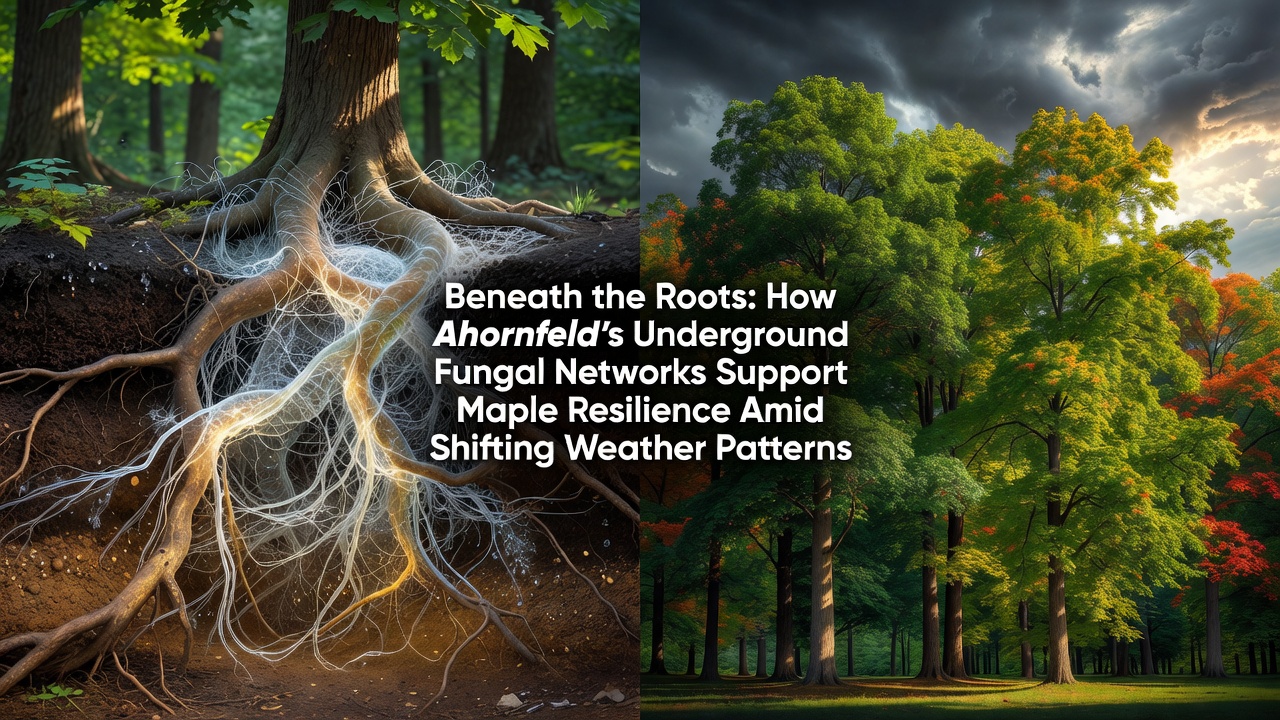
Beneath the Roots: How Ahornfeld's Underground Fungal Networks Support Maple Resilience Amid Shifting Weather Patterns
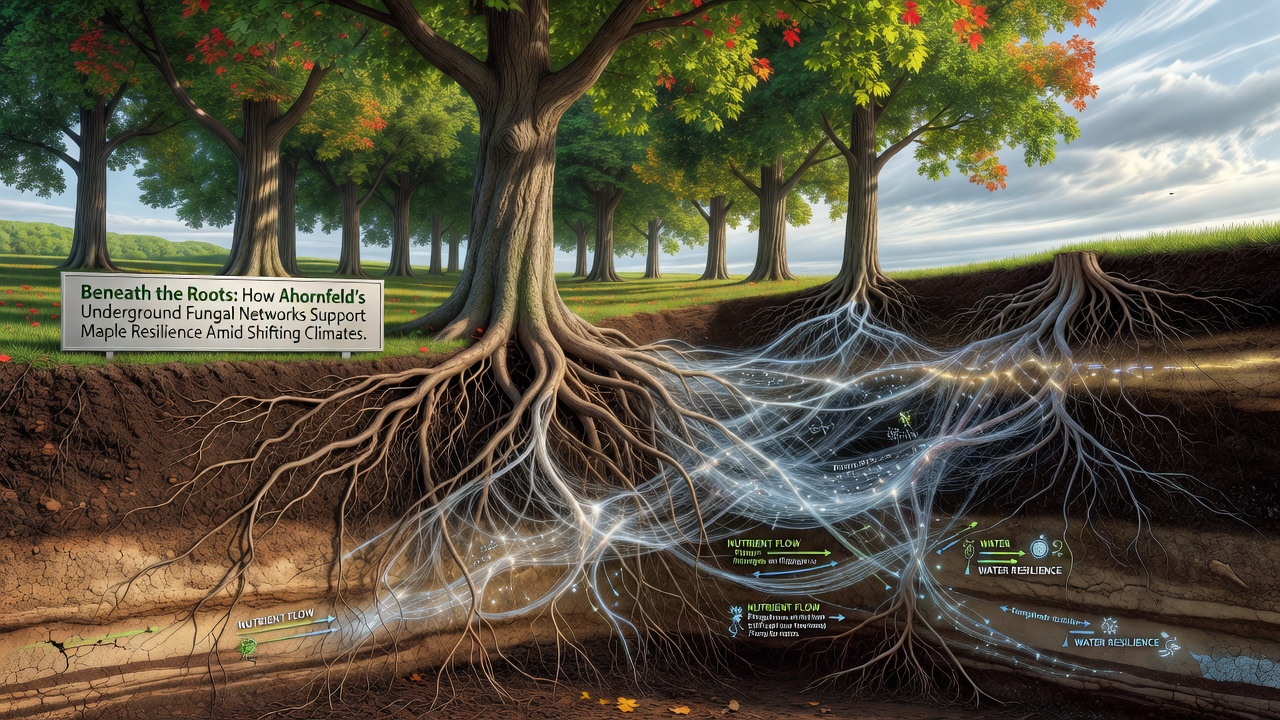
Maple trees in Ahornfeld rely on extensive underground fungal networks that link root systems across stands, and researchers have documented how these connections transfer nutrients and water during periods of environmental stress. Studies from forestry institutes show that mycorrhizal fungi form symbiotic relationships with maple roots, extending the reach of each tree into surrounding soil layers where individual roots cannot access resources alone. Data collected in the region indicates these networks become especially active when precipitation patterns shift and temperatures rise above historical averages for the area.
Structure and Function of the Networks
Common mycorrhizal associations in Ahornfeld involve fungi that colonize maple roots and create thread-like structures called hyphae, which branch outward and connect multiple trees. According to observations from European forest monitoring programs, a single mature maple can link to dozens of neighboring trees through these fungal pathways, allowing carbon compounds and minerals to move between individuals. Researchers at institutions in Germany and Canada have measured phosphorus and nitrogen transfers that increase when soil moisture drops below typical levels during late summer months.
What's notable is that the same networks also appear to moderate the effects of heavy rainfall events, which have become more frequent in recent decades. Soil samples taken in Ahornfeld demonstrate that fungal hyphae stabilize aggregates around roots, reducing erosion and maintaining aeration even after intense downpours. One long-term plot established by local forestry services recorded stable root health in connected maples during the wetter autumn of 2025, while isolated saplings showed higher rates of root rot.
Response to Changing Weather Conditions
Weather records from the Ahornfeld district reveal an increase in both prolonged dry spells and sudden temperature spikes since the early 2000s. In September 2026, monitoring stations reported soil temperatures remaining elevated two degrees above the 30-year average for the month, coinciding with reduced rainfall totals. Maple stands with dense fungal connections maintained higher leaf water potential during these weeks compared with stands where network density was lower, according to measurements published by regional agricultural research centers.
Turns out the fungi also produce enzymes that help trees access organic nitrogen locked in leaf litter, a process that becomes more valuable when mineral uptake from drying topsoil slows. Field experiments conducted by university teams in central Europe found that maples sharing fungal partners recovered faster after drought stress than those grown in sterilized soil without such partners. These findings align with similar work reported from Canadian boreal forests, where analogous networks support sugar maple and other hardwood species under variable precipitation regimes.
Evidence from Ongoing Monitoring
Local forestry crews began systematic soil coring in 2022 to track changes in fungal biomass beneath maple canopies. Results released in mid-2026 show that hyphal length per gram of soil increased in plots experiencing moderate drought, suggesting the networks expand when trees signal resource scarcity. Australian research on eucalypt-fungal systems has produced comparable patterns, indicating the mechanism operates across different temperate forest types.
Observers note that younger maples benefit particularly when they establish connections early, gaining access to resources stored by older trees. Data from permanent sample plots in Ahornfeld indicate that saplings linked to established networks exhibited 18 percent greater diameter growth during the variable weather of 2024 and 2025 than unlinked individuals of the same age. European Union environmental reports list mycorrhizal density as one indicator of forest adaptive capacity under projected climate scenarios for central Europe.
Implications for Forest Management
Forest managers in the district have adjusted thinning practices to preserve clusters of maples that share fungal partners rather than isolating individual high-value trees. Guidelines issued by regional authorities encourage retention of coarse woody debris, which supports fungal communities that in turn maintain network continuity. Soil disturbance during harvesting operations is now limited in designated zones to avoid severing hyphal connections documented in earlier surveys.
Continued sampling scheduled for autumn 2026 will test whether the networks sustain their function if another dry period develops. Preliminary models developed by German research consortia project that intact fungal linkages could offset up to 30 percent of projected growth reductions in maples under moderate warming scenarios through the 2030s.
Conclusion
Underground fungal networks in Ahornfeld supply maples with pathways for resource sharing that become critical during periods of shifting precipitation and temperature. Long-term measurements confirm increased resilience in connected stands, and management approaches now incorporate protection of these soil communities. Further data collection will clarify how these systems respond to additional weather variability expected in coming seasons.